This one is the History, War and Politics Quiz conducted by me and Akshay on the Open Day. Tremendous hard work by everybody involved. It's a quiz I'll long remember.
Sunday, March 24, 2013

The Business Quiz - NSIT Quiz Fest - 2013 - Prelims
Here is the Business Quiz I conducted during the NSIT Quiz Fest - 2013. Extraordinary inputs in the quiz have been provided by Sarthak, Vinayak, Vidya, Archit, Shashank and the others. Thank you for making this the way it turned out to be.
Thursday, February 28, 2013
Quriosity - 3

Answer (Highlight to View): Roshni Nadar (Executive Director and CEO of the HCL Corporation) , She is the daughter of Shiv Nadar (founder of HCL)
Wednesday, February 20, 2013

Monday, February 18, 2013
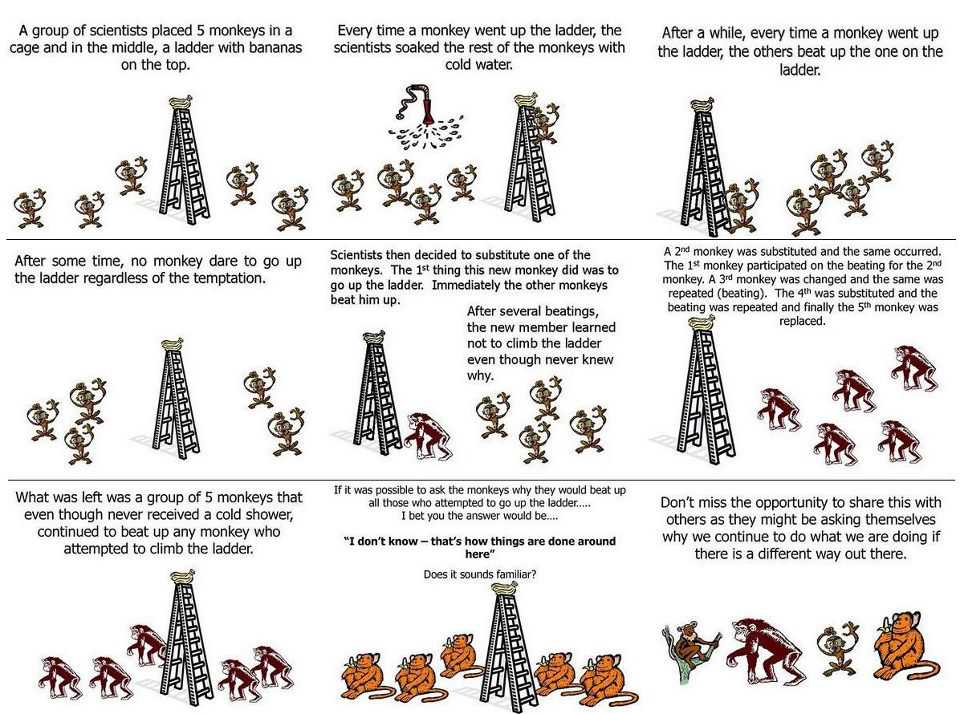
The Power of a Question Mark
Heterodoxy, until a few years ago, and sometimes even today,
was considered a taboo and a path most feared to tread. Why? It is because
human beings are uncomfortable with change. There is an innate resistance to
question the way things have been and to follow reason to discover the truth
that may not only be unraveling but unsettling too. It is easy for us to
comfortably pretend that things are perfect the way they have been and that
ignorance is bliss. It is here that we surrender reason to superstition.
Perhaps, no symbol, or forms thereof, in the English
language is as wonderful as ‘?’. The power to ask questions, to look for
answers and to challenge notions has played a far greater role in the
development of civilizations than all of man’s other tools put together. While
we were being taught the fundamentals of research, at our orientation in CCS, we
were told that every good research project begins with a good research question
– a ‘?’ seeking answers to or challenging pre-conceived notions about the way the
society works. This would not only serve as the keystone of our research here
but also for any other task that we would embark upon in our future.
Whether it is laying down rules and policies for the world’s largest democracy, delivering products and services to millions as a corporate entity, as a liberal think tank or even as an individual fighting for his/her rights, we must realize the immense power of asking the right kind of questions. Rather than accepting things at face value, we need to approach things with positive criticism. We need to question why things are they way they are and vision what if they were different. We need to look for solutions beyond what our surroundings have conditioned us to.
The only thing that
separates man from animal is his ability to reason beyond the obvious, and if
we surrender the one faculty that sets us apart, we would send the civilization
back a million years.
A recent article that I came across on the Web, which
triggered this chain of thought:
Simpler Graphic
Sunday, February 17, 2013

Tuesday, February 12, 2013
Rashmirathi - Krishna Ki Chetaavni
Rashmirathi is a poem by Ram Dhari Singh Dinkar which I came across while watching videos from the movie Gulaal. Piyush Mishra recites than piece in a manner that leaves you in complete awe. The poem in itslef is a marvel.
Piyush Mishra's recitation:
सौभाग्य न सब दिन होता है, देखें आगे क्या होता है
मैत्री की राह दिखाने को, सब को सुमार्ग पर लाने को
दुर्योधन को समझाने को, भीषण विध्वंस बचाने को
भगवान हस्तिनापुर आए, पांडव का संदेशा लाये
दो न्याय अगर तो आधा दो, पर इसमें भी यदि बाधा हो
तो दे दो केवल पाँच ग्राम, रखो अपनी धरती तमाम
Piyush Mishra's recitation:
"As per the original agreement Pandavas were to get
back their kingdom when they returned from 14 years exile in the forests. But
Duryodhan refused to oblige and part with the land. Lord Krishna came to
Duryodhan to persuade him to see the reason and give Pandavas at least five
villages where they could live peacefully. Refusal of Duryodhan ultimately
became the cause of the mother of all war, the unparalleled war of Mahabharat.
This excerpt describes the meeting of Lord Krishna with Duryodhan that ended
with Krishna announcing the inevitability of war that Duryodhan would surely
lose. Dinkars narration is superb and captures the drama beautifully. Meter is
perfect and language , as always, very pure. On the eve of Mahabharata War
Kunti, went to Karna and requested him to diffuse the war by leaving Duryodhana
and coming over to Pandavas side as he was her first born and it was only
appropriate for him to fight from the side of Pandavas. A part of Karnas reply
in words of Ramdhari Singh Dinkar is given below. Karna says that even as he
foresees a defeat for Kauravas, he must fight from the side of Duryodhana. He
says that the war is quite pointless yet it is a destiny that has to be
fulfilled. - Rajiv K. Saxena"
Here is the full text of the poem:
वर्षों तक वन में घूम घूम, बाधा विघ्नों को चूम चूम
सह धूप घाम पानी पत्थर, पांडव आये कुछ और निखर
सौभाग्य न सब दिन होता है, देखें आगे क्या होता है
मैत्री की राह दिखाने को, सब को सुमार्ग पर लाने को
दुर्योधन को समझाने को, भीषण विध्वंस बचाने को
भगवान हस्तिनापुर आए, पांडव का संदेशा लाये
दो न्याय अगर तो आधा दो, पर इसमें भी यदि बाधा हो
तो दे दो केवल पाँच ग्राम, रखो अपनी धरती तमाम
हम वहीँ खुशी से खायेंगे, परिजन पे असी ना उठाएंगे
दुर्योधन वह भी दे ना सका, आशीष समाज की न ले सका
उलटे हरि को बाँधने चला, जो था असाध्य साधने चला
जब नाश मनुज पर छाता है, पहले विवेक मर जाता है
हरि ने भीषण हुँकार किया, अपना स्वरूप विस्तार किया
डगमग डगमग दिग्गज डोले, भगवान कुपित हो कर बोले
जंजीर बढ़ा अब साध मुझे, हां हां दुर्योधन बाँध मुझे
ये देख गगन मुझमे लय है, ये देख पवन मुझमे लय है
मुझमे विलीन झनकार सकल, मुझमे लय है संसार सकल
अमरत्व फूलता है मुझमे, संहार झूलता है मुझमे
भूतल अटल पाताल देख, गत और अनागत काल देख
ये देख जगत का आदि सृजन, ये देख महाभारत का रन
मृतकों से पटी हुई भू है, पहचान कहाँ इसमें तू है
अंबर का कुंतल जाल देख, पद के नीचे पाताल देख
मुट्ठी में तीनो काल देख, मेरा स्वरूप विकराल देख
सब जन्म मुझी से पाते हैं, फिर लौट मुझी में आते हैं
जिह्वा से काढती ज्वाला सघन, साँसों से पाता जन्म पवन
पर जाती मेरी दृष्टि जिधर, हंसने लगती है सृष्टि उधर
मैं जभी मूंदता हूँ लोचन, छा जाता चारो और मरण
बाँधने मुझे तू आया है, जंजीर बड़ी क्या लाया है
यदि मुझे बांधना चाहे मन, पहले तू बाँध अनंत गगन
सूने को साध ना सकता है, वो मुझे बाँध कब सकता है
हित वचन नहीं तुने माना, मैत्री का मूल्य न पहचाना
तो ले अब मैं भी जाता हूँ, अंतिम संकल्प सुनाता हूँ
याचना नहीं अब रण होगा, जीवन जय या की मरण होगा
टकरायेंगे नक्षत्र निखर, बरसेगी भू पर वह्नी प्रखर
फन शेषनाग का डोलेगा, विकराल काल मुंह खोलेगा
दुर्योधन रण ऐसा होगा, फिर कभी नहीं जैसा होगा
भाई पर भाई टूटेंगे, विष बाण बूँद से छूटेंगे
सौभाग्य मनुज के फूटेंगे, वायस शृगाल सुख लूटेंगे
आखिर तू भूशायी होगा, हिंसा का पर्दायी होगा
थी सभा सन्न, सब लोग डरे, चुप थे या थे बेहोश पड़े
केवल दो नर न अघाते थे, धृतराष्ट्र विदुर सुख पाते थे
कर जोड़ खरे प्रमुदित निर्भय, दोनों पुकारते थे जय, जय .
रामधारि सिंह दिनकर
'रश्मीरथी'
Sunday, February 3, 2013
The Man in the Arena
Below is the most valuable extract from the 35-page speech - 'Citizenship in a Republic' by Theodore Roosevelt. Inspiring indeed.
It is not the critic who counts; not the man who points out how the strong man stumbles, or where the doer of deeds could have done them better. The credit belongs to the man who is actually in the arena, whose face is marred by dust and sweat and blood; who strives valiantly; who errs, who comes short again and again, because there is no effort without error and shortcoming; but who does actually strive to do the deeds; who knows great enthusiasms, the great devotions; who spends himself in a worthy cause; who at the best knows in the end the triumph of high achievement, and who at the worst, if he fails, at least fails while daring greatly, so that his place shall never be with those cold and timid souls who neither know victory nor defeat.
It is not the critic who counts; not the man who points out how the strong man stumbles, or where the doer of deeds could have done them better. The credit belongs to the man who is actually in the arena, whose face is marred by dust and sweat and blood; who strives valiantly; who errs, who comes short again and again, because there is no effort without error and shortcoming; but who does actually strive to do the deeds; who knows great enthusiasms, the great devotions; who spends himself in a worthy cause; who at the best knows in the end the triumph of high achievement, and who at the worst, if he fails, at least fails while daring greatly, so that his place shall never be with those cold and timid souls who neither know victory nor defeat.
Saturday, February 2, 2013
The Morality of Free Markets with Michael Sandel
The title and content of this post has been inspired from a
book by Michael Sandel, whom I got a chance to meet at the Jaipur Literature
Festival this year. For one thing, Professor Sandel is amazing entertainer. He
enthralls you with his extremely simple yet profound analogies. And then he
makes you stress your grey muscles, makes you think along lines you’d never
have imagined and walk those dark corridors of your inner self that you’ve
rarely treaded before.
The moment I got to know Professor Sandel was coming for the Jaipur Literature Festival, the urge that lay within me to go to this incredibly amazing event heighted to new levels. The first time I heard about him was when Roshan, a senior and friend, suggested me the ‘Justice with Harvard’ series. It is an introductory compulsory course in philosophy for every undergraduate at Harvard.
http://www.justiceharvard.org/
The essence of his talk, like always, was a seemingly simple dichotomy: “You are the Principal of a school where the performance of children is deteriorating by the day. The main reason seems to be that the children are not inspired to read enough books. Someone comes up to you with an excellent idea. Pay $2 to a child for every book he/she reads. How many of you would do it? Why?”
Unlike the minority of hands that went up in the air, I was against this solution. For one, by paying children to read the books, you’re destroying the essence of learning. Learning is not only Science, Commerce or Economics. Learning is experience, learning is knowledge that you get by constant voluntary exposure to things that you like. And it is that inherent thirst that drives you to put that education into practical use, to create, to innovate and to find yourself farther than you were yesterday - pushing limits and creating new boundaries. The concept of education cannot be limited to paper. It is in the world around us. I believe that somebody who can dance well is every bit as well educated as one who can solve algebra. It’s just that perspectives are different and extremely sad that the latter is valued much more than the former.
Even if, for the purpose of this argument, we were to assume that education and learning can be confined to reading more and more books, I find the solution majorly flawed in several aspects. For one, what happens to the children’s reading habits when the money stops? How far can you educate them by bribing them to study? How will one ensure the integrity and quality of the education being imparted now that education is no more that actual goal but just the means to the goal – money. To substantiate what I was thinking, Professor Sandel actually told us that one of the effects of this experiment, where it was implemented, was that it resulted in children reading thinner books. The questions are numerous once one starts pondering over them.
The moment I got to know Professor Sandel was coming for the Jaipur Literature Festival, the urge that lay within me to go to this incredibly amazing event heighted to new levels. The first time I heard about him was when Roshan, a senior and friend, suggested me the ‘Justice with Harvard’ series. It is an introductory compulsory course in philosophy for every undergraduate at Harvard.
http://www.justiceharvard.org/
The essence of his talk, like always, was a seemingly simple dichotomy: “You are the Principal of a school where the performance of children is deteriorating by the day. The main reason seems to be that the children are not inspired to read enough books. Someone comes up to you with an excellent idea. Pay $2 to a child for every book he/she reads. How many of you would do it? Why?”
Unlike the minority of hands that went up in the air, I was against this solution. For one, by paying children to read the books, you’re destroying the essence of learning. Learning is not only Science, Commerce or Economics. Learning is experience, learning is knowledge that you get by constant voluntary exposure to things that you like. And it is that inherent thirst that drives you to put that education into practical use, to create, to innovate and to find yourself farther than you were yesterday - pushing limits and creating new boundaries. The concept of education cannot be limited to paper. It is in the world around us. I believe that somebody who can dance well is every bit as well educated as one who can solve algebra. It’s just that perspectives are different and extremely sad that the latter is valued much more than the former.
Even if, for the purpose of this argument, we were to assume that education and learning can be confined to reading more and more books, I find the solution majorly flawed in several aspects. For one, what happens to the children’s reading habits when the money stops? How far can you educate them by bribing them to study? How will one ensure the integrity and quality of the education being imparted now that education is no more that actual goal but just the means to the goal – money. To substantiate what I was thinking, Professor Sandel actually told us that one of the effects of this experiment, where it was implemented, was that it resulted in children reading thinner books. The questions are numerous once one starts pondering over them.
However, the counter-arguments posed by those who thought
otherwise were, if not entirely convincing, quite impressive. One said that.
“By rewarding those who come first in class with monetary incentives, we are
giving them more resources so that they can make use of them to advance even
further. It’s just a better way of re-distributing resources from the less
deserving to the more deserving.” Another argument posed was that the ends
justify the means, i.e. , even though it is not the right way to go about it
but the forcing children to read more through monetary incentives may arouse
their interest in certain fields and may thus help in their education. I could
relate well to this argument I have seen this happening to my peers. Forced to
read books to crack the Verbal Ability section for CAT, some of them actually
liked the practice becoming avid readers.
However, I still feel that, firstly, we interpret the
meaning of the word ‘education’ in a much narrower manner than we ought to. Secondly,
there is only so much money and free markets can do for you. Education is like
evolution. It’s a process that takes place gradually. The path travelled is as
important as the milestones crossed. There are certain things money can’t buy,
and its better we realize that and take appropriate measure than bargaining for
the wrong kind of deals.
Meeting Professor Sandel in person was certainly one of the most amazing experiences I’ve had. I even bought his new book – What Money Can’t Buy and got it personally signed from him.

Meeting Professor Sandel in person was certainly one of the most amazing experiences I’ve had. I even bought his new book – What Money Can’t Buy and got it personally signed from him.

Monday, December 10, 2012
Why FDI ?
Ah yes I know every second soul on this earth is ranting about FDI. Well, here is a little piece from me. I had written it while applying for a research internship on Public Policy.
Like a coin with two sides, every issue can be interpreted to have its own merits and demerits and FDI in multi-brand retail is no exception. However, the key lies in differentiating between foresight and myopia. Allowing 51% FDI in multi-brand retail will surely impact already established system in India’s largely unorganized retail sector, resulting in a redistribution of profits and dividends, which may benefit a large number of other people while it may not be in the best interests of some others. As was the case with the economic reforms of 1991, there are uncertainties surrounding the opening up of our large retail sector to foreign forces. However, we must set aside our xenophobia and look at the issue rationally in its right perspective.
With over 50% of our working population practicing agriculture, but contributing less than 20% to our GDP(CRISIL, November 2010), it is evident that Indian farmers are largely denied their dues and most of the profits are reaped by the middlemen who source their produce to the markets. In India, farmers receive only ~30% of the end consumer price as compared to 50-70 percent in more developed countries (Mall and Singhi, BCG/CII, Feb 2011). Moreover, due to the fragmentation of the current retail sector, the inefficient supply chain infrastructure results in large quantities of produce being wasted. This not only hurts the farmers but also increases prices, thereby affecting the consumers. Professional multi-national companies that will enter markets following the reform would deal directly with the producer and eventually develop cutting edge infrastructure to carry the produce directly to the market. This would eliminate the intermediaries, thus increasing price realization by the farmer by 10-30 percent and reduce handling and wastage by 25-30 percent (Mall and Singhi, BCG/CII, Feb 2011). The farmer not only earns better but his produce is also free from being at the mercy of the inefficient supply chain infrastructure of the fragmented industry.
While India has a rich human capital, lack of quality institutions for higher education and low literacy rate result in large number of youth with an education level of class XII or below. They are not prepared to compete in India’s service based economy. With the set of qualifications that they possess, such individuals, largely from lower middle class families, would benefit from the millions of jobs that the organized retail would create. Moreover, the additional vocational training that the multinationals would provide would not only enhance their personality but also add to their skill set. Additionally, due to increased competition and free market dynamics, it is the consumer who stands to gain. The prices will be curbed leading to higher savings and an overall improvement in the living standard of an average Indian. Not only will the prices of commodities go down, consumers will also benefit from the enhanced variety and quality.
According to a random survey of 1.6 million samples in 2008 by the Government under the Prevention of Food Adulteration Act, about 7 percent of food products are adulterated (Mall and Singhi, BCG/CII, Feb 2011). Organized retail through FDI will not only ensure quality standards but will also bear accountability towards the common man. A greater transparency in the entire procurement process will result in reduced tax evasion. This will eventually lead to huge savings for the exchequer, which can be invested in the country’s other development initiatives such as education or healthcare. The estimated investment required in the supply chain infrastructure for post harvest agricultural produce during the 11th Five Year Plan is Rs. 64,312 crores (Kumar, FICCI, JIPF). Such a large investment requires crucial participation from the private sector and FDI will pave a way for the same.
As discussed, the primary losers in the new system would be the intermediaries and for good. Another set of people who may face certain difficulties are the local kirana shop dealers and ‘Mom and Pop’ stores, who would not be able to compete with the advanced setups and lower prices of the multinational companies and may thus run out of business. However, the impact of organized retail on this fragmented sector would not be as severe as it is projected to be. Firstly, the multinationals would only be permitted to set up their stores in cities with a population of over one million. As per the census of 2011, there are only 46 such cities in India (Census 2011). These cities already have a certain sector of organized retail dominated by local players such as Reliance and Bharti among others. Entry of global players in such markets will only increase efficiency and benefit the consumer. Secondary, kirana stores share certain chemistry with their customers through services such as credits, discounts and convenience among other which no multi-national can provide. Hence, they would retain a certain loyal customer base. Thirdly, the sons and daughters of the owners of these ‘Mom and Pop’ stores would find well paying jobs in these companies resulting in a better standard of living of the family in the long run. Lastly, I believe there is plenty of market both for organized and unorganized retail to thrive even after the entry of global players. McDonald’s did not kill Haldiram’s, neither did Vodafone kill Idea.
Thus, the benefits of FDI in the form of better returns to the farmer, better supply chain infrastructure, increased employment, benefits to the consumer and transparency outweigh a few strict measures that are required to be carried out. FDI in multi-brand retail is a huge leap and as is usually the case with reforms, this bitter-tasting medicine will reap high dividends in the long run.
References:
1. Dharmakriti Joshi, Vidya Mahambre and Poonam Munjal , ‘Skilling India – The Billion People Challenge’, (A report by CRISIL Centre of Economic Research), November 2010.
2. Abhishek Singh and Amitabh Mall, ‘Building a New India – The Role of Organized Retail in Driving Inclusive Growth’, (A report by Boston Consulting Group and Confederation of Indian Industry), February 2011.
3. Rajiv Kumar, FDI in Multi-Brand Retail in India,( A Report presented as Secretary General of FICCI, Japan India Partnership Forum).
4. Demographics of India, Wikipedia, Last modified 27th October, 2012. (http://en.wikipedia.org/wiki/Demographics_of_India)
5. Ravi Aron, “FDI in Indian Retail: The Big Benefits Will Come Tomorrow, Not Today”, Law and Public Policy, India Knowledge@Wharton, September 20, 2012 (http://knowledge.wharton.upenn.edu/india/article.cfm?articleid=4702)
6. Census 2011, (http://censusindia.gov.in)
Thursday, November 8, 2012
Quriosity - 0

14 years before the event took place, in 1898, a novel “Futility” by Morgan Robertson released which described incidents incredibly similar to those involving the incident. What incident does the novel speaks about ?
Answer (Highlight Blank Space to view): The sinking of RMS Titanic
Answer (Highlight Blank Space to view): The sinking of RMS Titanic
Fundae
Initially, I had thought I would just my blog to rants and things close and personal but then wouldn't it be a little too boring, no ? Here is an oldie, a gem that makes you laugh your guts out. Ladies and Gentleman, presenting Mr. Vishwa Bandu Gupta.
Wednesday, November 7, 2012
Doppelgangers
I found these awesome celeb doppelgangers on Quora.
Frankly, admitting I see a lot of non-celeb ones in my real life too. Friends, Acquaintances, Strangers. :D

Frankly, admitting I see a lot of non-celeb ones in my real life too. Friends, Acquaintances, Strangers. :D
Ekla Cholo Re
Now that I am
relatively free, I think it’s high time I continue with my blogging activity
and as always I promise to be fairly regular. I write this article on a lazy
Wednesday, sitting in an empty room. I apologize for any tone of negativity
that my surroundings and my frame of mind may render to this piece.
When I was a kid, I had this fear of being left alone. I was mischievous as a rat, with an everlasting
curiosity that provided me with the audacity to meddle with all that came my
way. Be it a person or a thing, I constantly mused myself by my
surroundings. Life was bliss. People-people everywhere. They were all nice to
you. Smiles, hugs, kisses and candies were more than common. Everything added
up so easily. You could stop talking to friends with the little finger and make
up with your thumb. Cricket and Football games were the only places where you
bickered and cold drinks and Uncle Chips were the ultimate panacea that swung
your mood instantly. Reductionism at its best. You could be Sachin Tendulkar
one instant, Spiderman the next. When your day started with a hot glass of milk
and Pokemon and ended tucked up in bed by your father’s side, watching news and
asking the silliest of questions and having them answered patiently, you know that
this just was it. In short, life was
simple.
Then, I grew up.
I met a whole new
set of friends when I moved to Nainital. Since I used to live in a boarding
school they were pretty much all I had. I don’t know whether it was some fault
of mine or just the fact that I was a vulnerable kid, I faced a tough time with
some of my batch mates. The bad-ass ones – you know the kind that act really
smart in school and then end up nowhere. Had it not been for a select few ones
who stood by my side, I’d have dropped out midway. This was followed by
friends, cousins and relatives in when I pursued my higher education in Delhi.
New relations were forged, some old broken. I learned several lessons one of
which was that no matter who you are, where you stand and what you do, deep
down everyone is alone, for good.
An old favorite written by one of the most genius man ever to have walked on the face of earth and sung by another as competent:
Tuesday, October 23, 2012
Exam Blues
I never thought I'd be writing before I get through my CAT, which is on the 29th of October. Though my preparation is quite not what I wanted it to be, I still feel, with my mock results, there is a good chance that I may strike gold. On some other parameters, 29th is the day to be. Why so? They're coming back again. Fear. Anxiety. Panic. Anxiety runs in my blood, a quality that I attribute largely to my mother. I have never felt what it is like to be calm in tight situations. It is a quality I have always fancied, but never possessed. Most of my defeats in life have have been a result of my failure to hold myself together when faced with adversities and uncertainties. Over-thinking has been as genetically passed to me as thick black hair or my large white teeth. Damn! Not now. Not once more. If there is a time to get rid of it, it is now. I believe CAT tests you more on your mental strength than your preparation. Even if I do not perform to the optimum in CAT, this is a test I should not fail. Not again. As is true with life, winning is more about character and less about skill. It's time I start winning. or at least start making efforts to win.
And they come back to you
Demons of the Past
And if you don't fight them now
May be you'll never do.
It's time to sleep.
And they come back to you
Demons of the Past
And if you don't fight them now
May be you'll never do.
It's time to sleep.
Thursday, July 12, 2012
What is a Boy?
Okay, this one is special. It was my first tryst with public speaking when Mrs. Rathore (I still remember that benign lady, our Geography teacher) handed me this piece. I absolutely loved it. I worked round the hours with Miss Deepa Shah and Miss Nirija Bisht, and tried my best to master this piece. I still vividly remember how nervous I was that day. The competition was among six speakers. While the fact that the "Gods of elocution" like Abhay Pande did not participate was true, we still had the better and more experienced speakers of the two sections which included stalwarts like Pappi Don (Swapnil), Sagar Lohani, Dushyant Joshi, Nishant Joshi and Craig Mcgowan. I was the only first-timer. I was a great deal scared. But somehow I had faith in my piece and (a little) faith in myself. Moreover, Miss Deepa Shah told me that I was improving significantly which did more to boost my confidence than any other thing. The day arrived. I had to speak sixth. The fact that everyone had spoken smoothly did enervate me a little. I made a few mistakes and flinched at them, which is a bad thing to do as you let the judge know that you have made one even if they may have actually missed it. However, overall it went quite fine. When we climbed down the podium, the speakers from the senior class who had spoken just before us congratulated us. A few of them told me that I did a decent job and stood a fairly decent chance to win a medal. I kept my fingers crossed. The results were announced. There was no doubt that Craig would win it as he had both a wonderful piece and a handsome persona. I don't exactly remember the name of his poem but it was something on men versus women. Nishant Joshi with his awesome recitation of Christabel by Samuel Taylor Colerdige stood second. By now my hopes had dwindled. But then, Mr. Emmanuel, in his usual slow way, announced my name. I was absolutely elated. Then I have no idea what happened. A lot of merry-making perhaps. Enough of jabber now, here is the piece:
WHAT IS A BOY ?
- Alan Beck
Between the innocence of babyhood and the dignity of manhood we find a delightful creature called a boy. Boys come in assorted sizes, weights, and colors, but all boys have the same creed: to enjoy every second of every minute of every hour of every day and to protest with noise (their only weapon) when their last minute is finished and the adult males pack them off to bed at night.
Boys are found everywhere—on top of, underneath, inside of, climbing on, swinging from, running around, or jumping to.
Mothers love them, little girls hate them, older sisters and brothers tolerate them, adults ignore them, and Heaven protects them.
A boy is Truth with dirt on its face, Beauty with a cut on its finger, Wisdom with bubble gum in its hair, and the Hope of the future with a frog in its pocket. When you are busy, a boy is an inconsiderate, bothersome, intruding jangle of noise. When you want him to make a good impression, his brain turns to jelly or else he becomes a savage, sadistic, jungle creature bent on destroying the world and himself with it.
A boy is a composite—he has the appetite of a horse, the digestion of a sword-swallower, the energy of a pocket-sized atomic bomb, the curiosity of a cat, the lungs of a dictator, the imagination of a Paul Bunyan, the shyness of a violet, the audacity of a steel trap, the enthusiasm of a firecracker, and when he makes something, he has five thumbs on each hand. He likes ice cream, knives, saws, Christmas, comic books, the boy across the street, woods, water (in its natural habitat), large animals, Dad, trains, Saturday mornings, and fire engines.
He is not much for Sunday School, company, schools, books without pictures, music lessons, neckties, barbers, girls, overcoats, adults, or bedtime. Nobody else is so early to rise, or so late to supper. Nobody else gets so much fun out of trees, dogs, and breezes. Nobody else can cram into one pocket a rusty knife, a half-eaten apple, three feet of string, an empty Bull Durham sack, two gum drops, six cents, a slingshot, a chunk of unknown substance, and a genuine supersonic code ring with a secret compartment.
A boy is a magical creature—you can lock him out of your workshop, but you can’t lock him out of your heart. You can get him out of your study, but you can’t get him out of your mind. Might as well give up—he is your captor, your jailer, your boss, and your master—a freckled-faced, pint-sized, cat-chasing, bundle of noise. But when you come home at night with only shattered pieces of your hopes and dreams, he can mend them like new with two magic words, "Hi Dad!"

Sunday, March 11, 2012
A Long Break
I know I had promised stories of my Mumbai extravaganza but I guess I am still powerless against my lazy self. Maintaining a blog takes much more effort than I had imagined. That story, along with many others, is lying there in my draft box waiting to be completed. I guess they will all have their day. For now I shall continue with my rants.
Life has once again been paced at a fast-forward mode. College. Quizzing. The Attic. Placement Committee. TIME. and much more almost always keeps me pretty much busy. Of late, I have been been listening to some real good music. What a wonderful world, Soundtrack of Five Hundred Days of Summer and a number of other songs. Needless to say, primary credit goes to my music specialist, Miss Shruti Bhati :) . However, the last four days have been a complete waste. I realized that these exams not only kill your time during the period for which they are scheduled, but have an after effect too. Post exams I have resisted all work and have either slept, read or loitered around at facebook. I feel sleepy and out of words.
For now I'll leave with this one:
Friday, December 16, 2011
Mumbai Diaries - 1
Yet again, I have to start with the same rant of not being too regular with the blog. Chuck it. Optimism is the order of the day. So let us bury the past behind us, and focus on what lies ahead - MOOD INDIGO :) (IIT Bombay's Cultural Fest).
Though I am far too full with work ( and I have done next to nothing in these holidays so far), I still don't feel like missing it. It's been almost three years in College and I haven't had a proper all friends trip yet (incredible, it seems). Besides, the Quiz Club people are pretty nice to hang out with. This post is just a precursor to lots that are soon to follow. Of course, I would've been a much happier man if Shruti would've tagged along. Decisions in life are made either by compulsion or by choice. It's harder when there is an overlap between the two. Don't worry you there, be confident of the latter, and I assure there are better times to follow. We'll miss you.
The bag is 'almost' packed and the remainder is what that bothers me. It's almost morning and I need to sleep before my father wakes up (ah yes, I'm still scared of him. Perhaps, will always be). All excited for the trip - something to get into the Mumbai Groove :)
Though I am far too full with work ( and I have done next to nothing in these holidays so far), I still don't feel like missing it. It's been almost three years in College and I haven't had a proper all friends trip yet (incredible, it seems). Besides, the Quiz Club people are pretty nice to hang out with. This post is just a precursor to lots that are soon to follow. Of course, I would've been a much happier man if Shruti would've tagged along. Decisions in life are made either by compulsion or by choice. It's harder when there is an overlap between the two. Don't worry you there, be confident of the latter, and I assure there are better times to follow. We'll miss you.
The bag is 'almost' packed and the remainder is what that bothers me. It's almost morning and I need to sleep before my father wakes up (ah yes, I'm still scared of him. Perhaps, will always be). All excited for the trip - something to get into the Mumbai Groove :)
Monday, October 3, 2011
There are Reasons to Believe in a Better World.
Yes, yes I admit I am one hell of a lazy blogger. Yes, yes I am a total kaamchor too.
Might be I can blame the Mid-Sems for this yet again, but for how many things and to what extent.
No matter if I do appear like a compulsive complainer, but one thing is certain - these exams do screw our life. There is so much in the world to do and they cage all our worldly desires, our happiness, our feelings and force us to undergo an unfair, unjust and oppressive evaluation of yourselves. Believe me, they are not just worth it. Here something to feel happy about. I don't know how Coca Cola does it, every single time ! Kudos :)
Subscribe to:
Posts (Atom)